Slovakia · Eastern Europe
Slovak Lángos with Garlic Water
My father-in-law's recipe, scaled down for a home kitchen
- Total
- 1 hr 30 min
- Active
- 30 min
- Rest
- 1 hr
- Difficulty
- Medium
Per serving · approx.
- kcal
- 380
- protein
- 8 g
- carbs
- 51 g
- fat
- 15 g
- Vegetarian
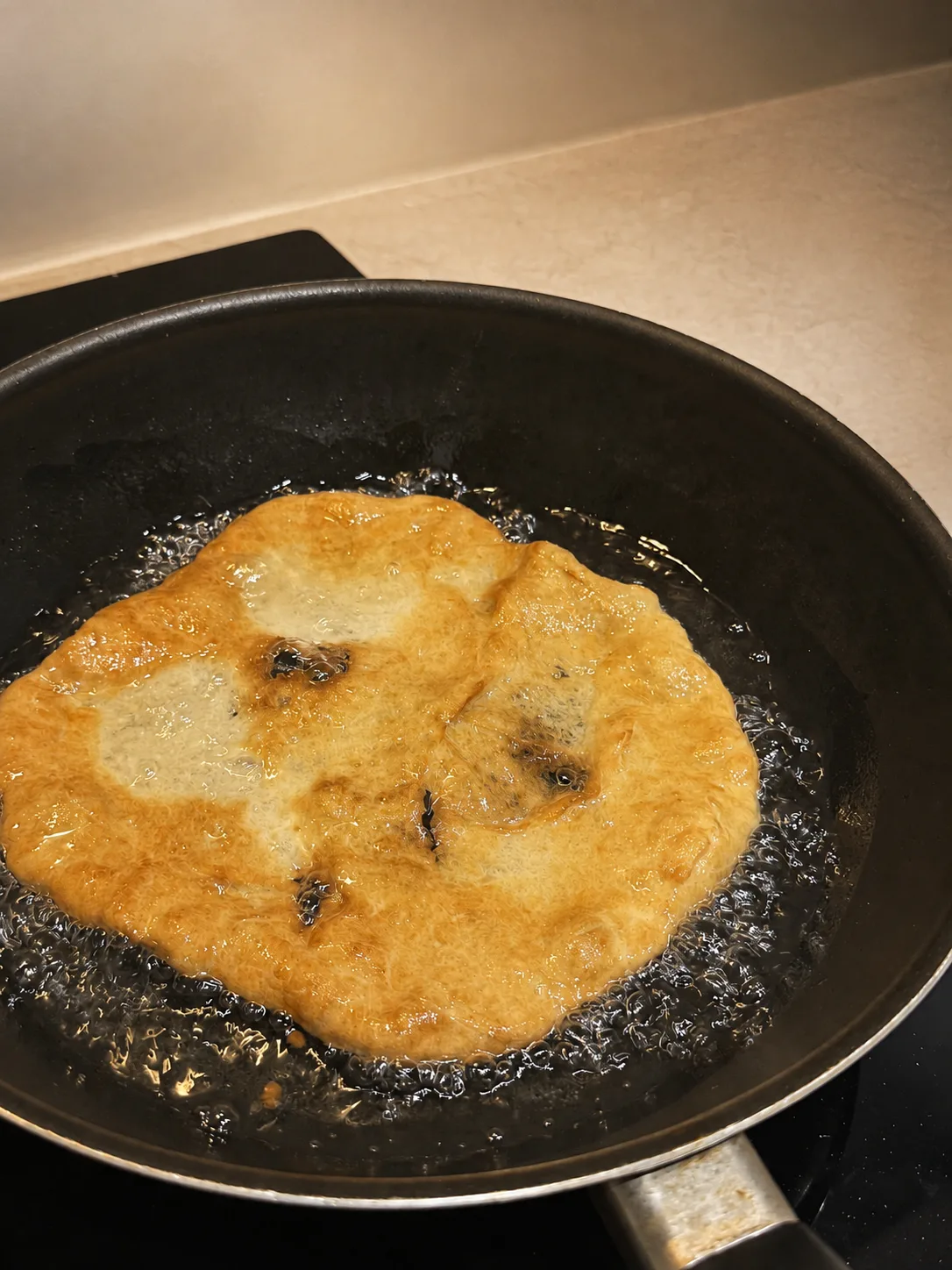
Lángos is Hungarian by birth. The name comes from láng, meaning flame, and it travelled with the old Austro-Hungarian empire until it was just as much at home in Slovakia, where my husband grew up eating it. This is his father’s version, scaled down for a home kitchen, and it is the plain one: no potato in the dough, no blanket of sour cream and grated cheese. Just a slack, sticky dough stretched thin by hand and fried hot and fast so it puffs and blisters, then brushed while it is still steaming with garlic crushed into salted water rather than oil. The garlic water is the whole thing. It soaks in rather than sitting on top, and an hour of standing takes the raw edge off it. Small pieces, one at a time, eaten standing up in the kitchen before anyone thinks to sit down.
- Vegetarian
- A treat
- Comfort food
- Budget friendly
Equipment
A deep, heavy pot. Depth matters more than width, since the dough needs room to float and puff rather than sitting on the base, and a heavy pan holds its temperature when a cold disc goes in · A wire rack set over a tray. Kitchen paper steams the underside soft and undoes the crust you just made · A thermometer, if you have one. The dough-scrap test below does the same job if you do not
From the pantry
Step by step, with timers. The screen stays awake.
Ingredients
Serves 5
Makes 5 lángos, one each
Dough
Garlic water
To fry and serve
From the kitchen
Method
Garlic water, first
The dough
Shape and fry
Notes
- Yeast. This is written around fast-action yeast. If you only have active dried, wake it in the lukewarm milk with the sugar for ten minutes first, then carry on as written.
- Milk. Whole milk gives the softest crumb, but semi-skimmed works, and water alone still makes a perfectly good lángos, just a plainer one.
- No garlic. If there is none in the house, or you are cooking for someone who will not eat it raw, salt the bread straight out of the pot instead, which is how children usually want it anyway.
- Oil. Sunflower and rapeseed are both right here, neutral with a high smoke point. Not olive oil: it burns well below frying temperature and its flavour fights the garlic.
Variations
- The dressed version, which is what most people in Hungary would picture: garlic water first, then sour cream spread over the hot bread, then a heap of grated cheese.
- Grated sheep cheese and a spoon of thick soured milk, which is the way it leans in parts of Slovakia.
- Sweet, for the last one of the batch. Skip the garlic water and dust it with icing sugar while it is still hot.
Storage & reheating
Lángos is at its best within about ten minutes of leaving the pot and it does not keep in any way that does it justice. If one survives, it revives better than you would expect in a hot dry pan for a minute a side, though never in a microwave, which turns it to leather. The dough is the part worth making ahead: after kneading it will sit covered in the fridge overnight, then come back to room temperature for an hour before you shape it. The garlic water keeps 2 days in the fridge.
Tips from the kitchen
- No thermometer? Drop in a small scrap of dough. It should sink briefly, then rise and sizzle steadily within about a second. Instant furious bubbling means the oil is too hot, sluggish means too cool.
- Never a rolling pin. It presses out the air the rise created, which is the entire reason the dough was left to prove.
- Oil your hands rather than flouring the worktop when you are stretching. Extra flour at this stage stiffens the dough and fights you.
- Brush them while they are hot, not warm. Hot bread drinks the garlic water in, cooled bread just wears it.
- The garlic water separates as it stands. That is normal, it is not broken, just stir it before you use it.
- Once it has cooled, strain the frying oil through a coffee filter and keep it. It will do this again two or three times.
The Cook's Journal
Made this one?
Setting up your journal. This only takes a moment.