The Catalogue · Nieves's Kitchen
The recipes so far
A collection that grows one dish at a time. Each one halal, cooked in my kitchen, and written down the way I actually make it.
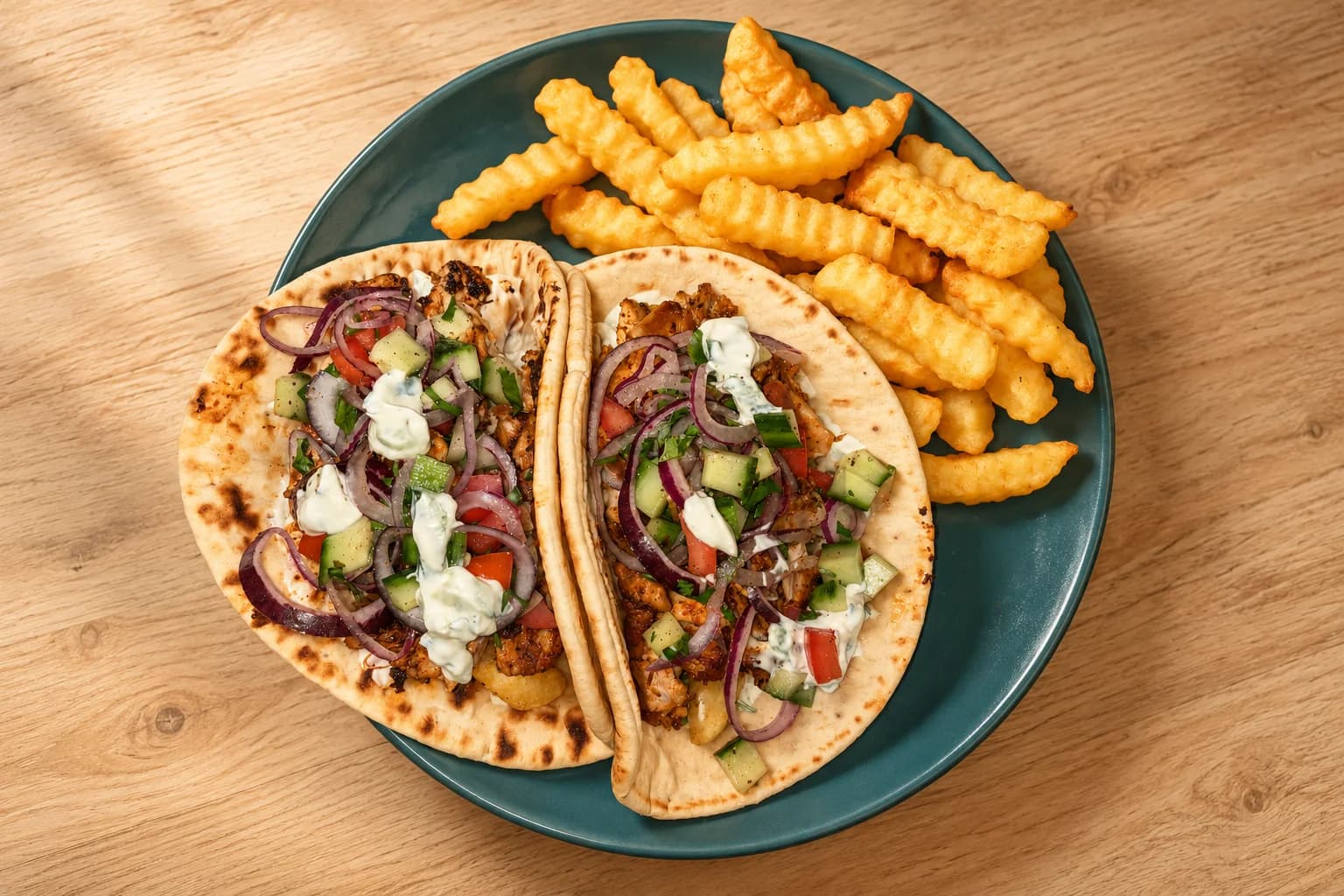
Chicken Gyros
610 cal · 38g protein
This is the gyros you buy from a Greek takeaway, made in a frying pan. Thigh fillets marinate in yogurt, lemon and a big handful of oregano, then sear whole until the outside is dark and crusted while the inside stays juicy. Sliced thin and tossed back into the hot pan for a minute, the strips get the crisp edges a spit gives them. Chips go inside the wrap, as they do in Greece, alongside shop-bought tzatziki and a sharp salad of tomato, cucumber and red onion with sumac and coriander. Everything is ready in about 45 minutes once the chicken has marinated.
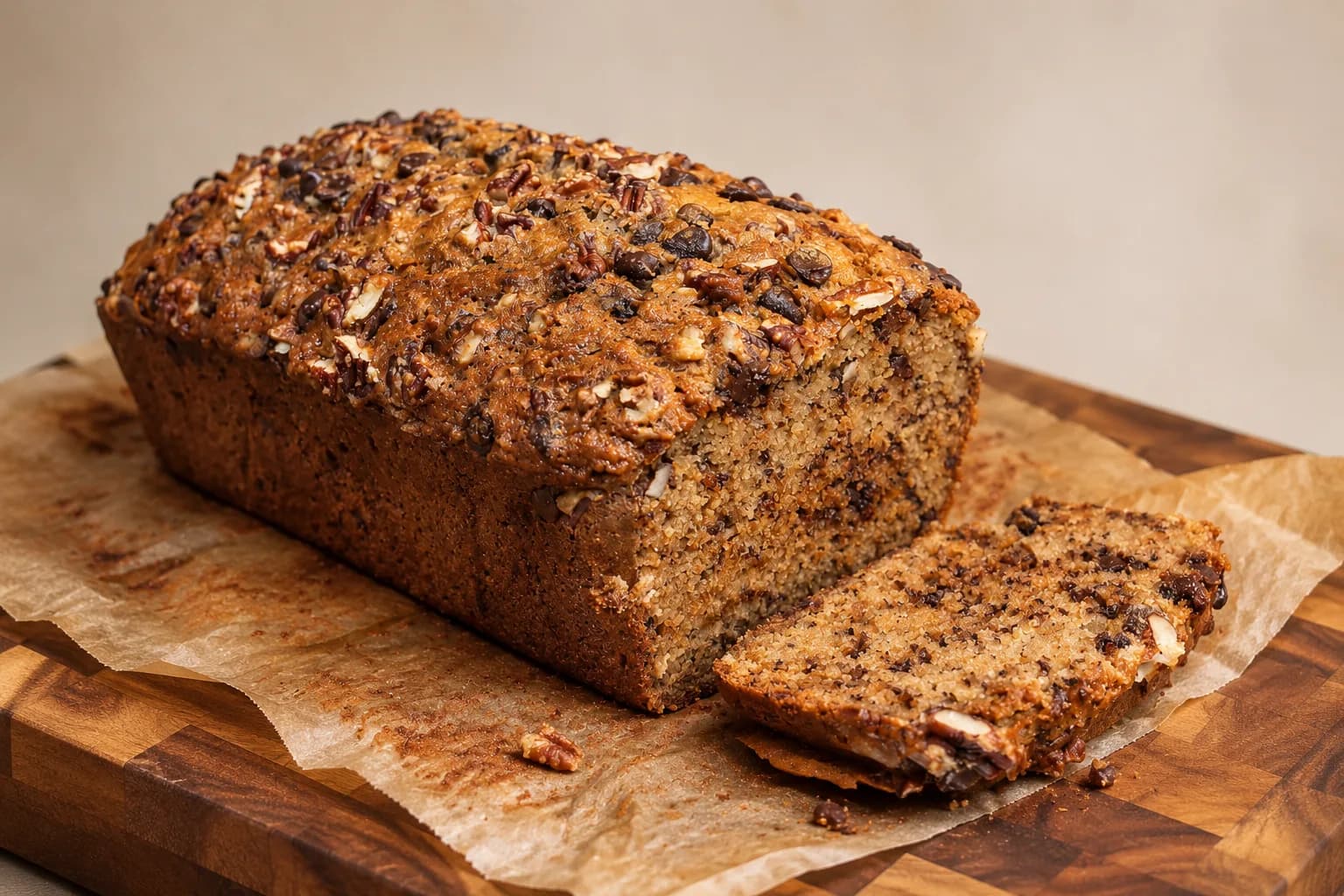
Brown Butter Banana Bread
375 cal · 6g protein
This is the rich kind of banana bread: brown butter, dark brown sugar, chunks of dark chocolate and toasted pecans, under a crackly sugar top. Browning the butter first gives the whole loaf a toffee, toasted-nut depth that plain melted butter never does, and the dark sugar holds on to moisture and tastes of caramel. There is no sour cream or yogurt: the butter, sugar and bananas carry all the moisture. The pecans and some of the chocolate go on top, pressed halfway into the batter, so they toast in the oven and every slice has some. It is the easy kind of bake: two bowls, a small pan, no mixer.
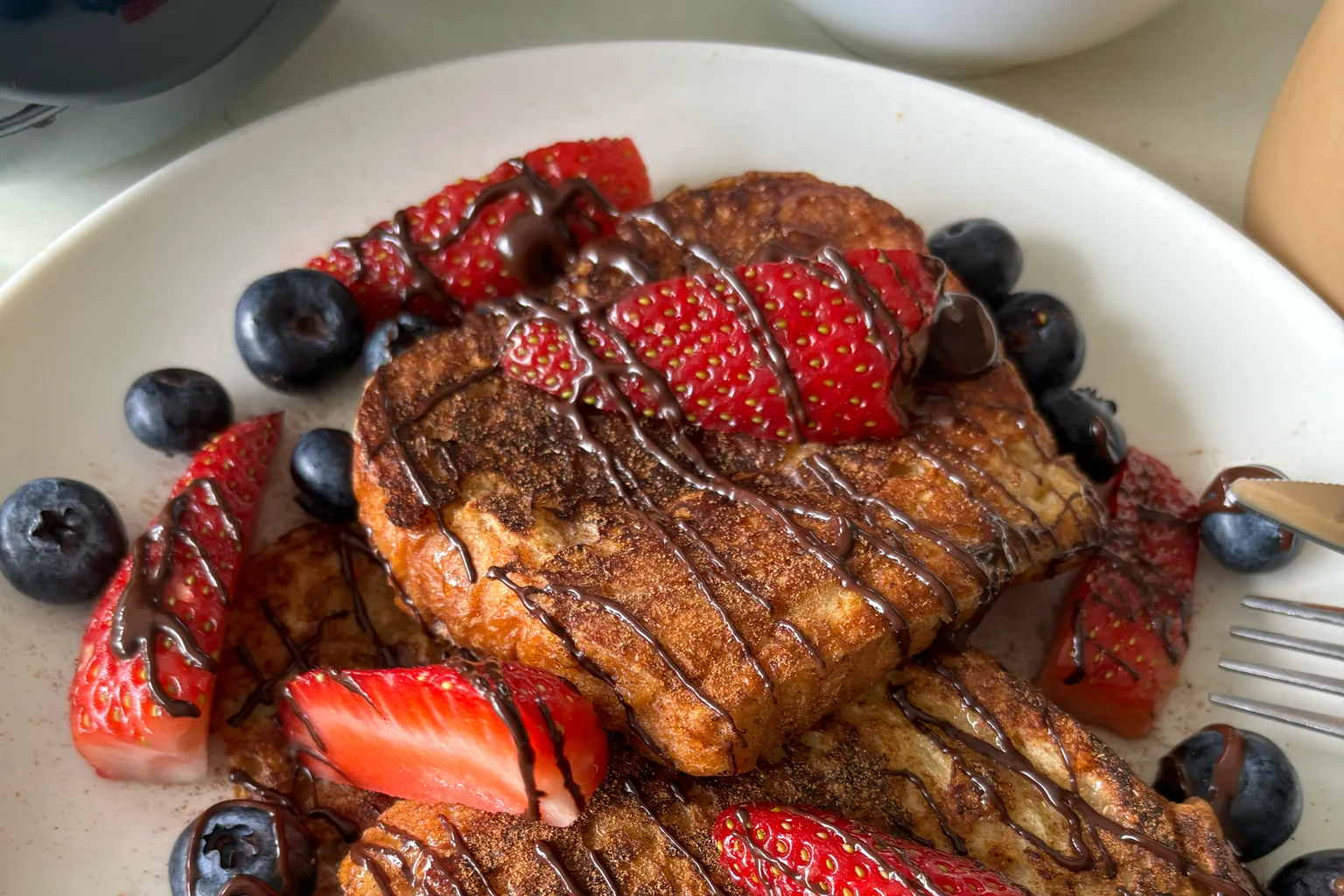
French Toast
760 cal · 22g protein
Good French toast is caramel-brown and buttery on the outside and soft and set on the inside, with no wet, eggy middle and no burnt edges. It comes down to two things: thick bread and a gentle pan. Slices 2.5 to 3cm thick soak up enough egg to stay soft, and medium-low heat gives the middle time to set before the crust goes too dark. The egg mix is only lightly sweetened, because sugar burns in the pan, so the sweetness goes on at the end with your favourite toppings: maple syrup, honey, fruit or a spoonful of chocolate spread.
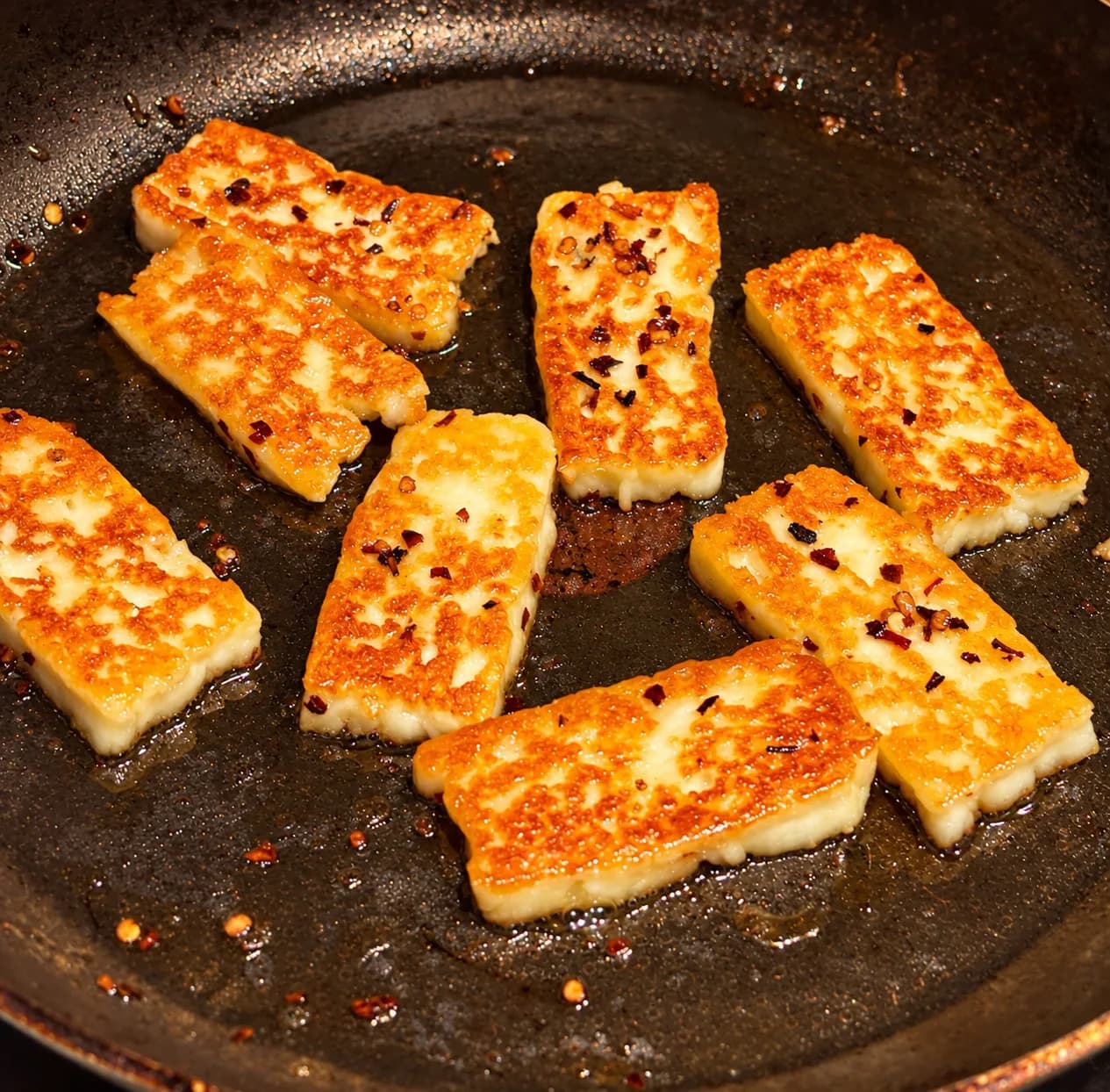
Hot Honey Halloumi
485 cal · 27g protein
Halloumi is the grilling cheese of Cyprus, firm enough to fry without melting into the pan. Here a single pack is sliced, soaked in hot water for 10 minutes, fried to a deep gold and turned in honey sharpened with chili flakes and lemon. The soak is what makes this version: it warms the cheese through so the middle stays soft rather than rubbery, and it takes the edge off the salt, so the sweet heat of the honey comes through. Serve it as a side for two, or roll it into warm flatbreads with tomato, cucumber and yogurt for a quick lunch.
Beef and Broccoli
540 cal · 37g protein
Beef and broccoli is the American takeaway's version of the Cantonese stir-fry of beef with gai lan, made with the round-headed broccoli that was far easier to buy in America. Done well it is three things at once: beef that is silky inside with crisp, browned edges, broccoli that is bright green with a little bite left in it, and a dark, glossy, garlicky sauce that coats every piece instead of sitting in a puddle underneath. This version is built so none of those is left to luck. The steak is half-frozen so it slices thin, velveted with a pinch of bicarbonate of soda and a little cornflour, then seared hard in a smoking pan, in batches and left alone, until the edges catch and crisp. The broccoli gets one minute in boiling water, steams dry, then a minute in the hot wok. The sauce leans on oyster sauce and two soy sauces, with a splash of rice vinegar for brightness and only as much stock as it takes to coat. Ginger goes in alongside the garlic, and green chili, coriander and a spoon of chili oil go on top for anyone who wants them.
Chewy Chocolate Chip Cookies
290 cal · 3g protein
This is the chewy kind of chocolate chip cookie, the kind I prefer: a crisp edge, a soft middle that bends, and real pools of dark chocolate. Everything in the method leans that way. The butter is melted rather than creamed, so no air gets whipped in to make them cakey, and an extra egg yolk adds richness and chew. Most of the sugar is dark brown, which brings a deep butterscotch flavour and keeps the middles moist, and a ten-minute whisk-and-rest at the start dissolves the sugar so the edges bake crisp and glassy. A chopped bar alongside the chips is what gives you the puddles of chocolate. The dough needs two hours in the fridge, longer if you can wait, and the shaped balls keep for three days, so you can bake six at a time and eat them warm.
Cinnamon Swirl Cake
410 cal · 5g protein
All the flavour of a tray of cinnamon rolls, with no yeast, no rolling and no proving. A plain vanilla batter goes into a tray, a buttery brown sugar and cinnamon paste is dotted over it and dragged through with a knife, and a vanilla glaze goes over the cake while it is warm. The cinnamon layer is generous with butter, so it bakes into gooey, caramel ripples, and the warm glaze melts down into them. The cake mixes in one bowl, takes about 25 minutes of work and is cut into fifteen pieces.
Cumin Lamb
775 cal · 36g protein
Cumin lamb, ziran yangrou, comes from the Muslim cooking of China's northwest, Uyghur and Hui, where lamb, cumin and chili have long gone together, on skewers over coals and in the wok. It is a dry stir-fry: no sauce, just slices of lamb seared until their edges crisp, then coated in toasted cumin, Sichuan pepper and chili and tossed with red onion and long green peppers. This version is built so an ordinary hob can do what a restaurant burner does. It uses shoulder rather than leg, because its fat keeps it juicy; the meat is partly frozen so it slices thin, then seared hard in batches so it browns instead of stewing. Cumin goes in three ways, ground into the marinade, toasted and crushed, and toasted and left whole, and the spice mix gets a full minute in the hot pan so it never tastes raw. Ginger goes in alongside the garlic, and a whole bunch of coriander and fresh green chili are piled on at the end.
Kimchi Fried Rice
765 cal · 18g protein
Kimchi bokkeumbap is what Korean home cooks make when the kimchi in the fridge has gone properly sour and there is rice left over from yesterday. It is built from leftovers and tastes nothing like it. In this version the kimchi is squeezed before it goes in, so it fries in butter instead of stewing in its own brine, and it cooks until every drop of liquid has gone and the edges turn sticky and dark. The juice you squeezed out goes back in raw with the rice, bringing back the sharp, bright kimchi flavour that the long frying cooks away. A spoon of gochujang melts into a second knob of butter, then the rice is pressed flat and left alone until the bottom turns into a crackling crust. It finishes the Korean way, with a fried egg, crumbled roasted seaweed and sesame, and then a generous heap of spring onion greens and sliced green chili, the fresh, green finish this kitchen puts on almost everything.
Kung Pao Chicken
685 cal · 43g protein
Gong bao ji ding is the Sichuan dish behind the takeaway kung pao. There are no peppers and no thick gloopy sauce: just small cubes of chicken stir-fried in oil scorched with dried chilies and Sichuan pepper, with garlic, ginger and spring onion, a spoonful of glossy sauce and a handful of peanuts. The sauce balances sugar against dark Chinkiang vinegar in equal measure, for the gentle sweet and sour the Sichuanese call lychee flavour, and everything is cut to roughly the same size so each mouthful catches a little of all of it. This version keeps those classic proportions and builds in the moves that make it hard to get wrong. Thigh stays juicy where breast dries out. The chilies start in cool oil so they darken slowly, then come out before the chicken goes in, so they cannot burn. The peanuts are toasted first and go in last, off the heat, so they crunch at the table. Ginger goes in right alongside the garlic, and the spring onion greens finish it fresh.
Lemon Loaf
300 cal · 4g protein
A coffee-shop lemon loaf in a smaller, two-egg size: a moist crumb from oil and yogurt, a lemon syrup soaked in while it is warm, and a thick lemon icing on top once it is cold. There is no extract, only real lemon. The zest of both lemons is rubbed into the sugar before anything else, so the crumb tastes of lemon rather than only of sourness, and the syrup makes it sharp right down to the base. It is mixed by hand in two bowls and bakes in an ordinary 2lb loaf tin, where it comes out a little shorter than a full-size loaf. The same recipe makes an orange loaf too (see the variations).
Salmon Rice Bowl
790 cal · 35g protein
This is the salmon rice bowl that went round the internet: leftover salmon and rice warmed under an ice cube, mashed with soy, Japanese mayonnaise and sriracha, and eaten wrapped in roasted seaweed. This version keeps that ten-minute shape and fixes what makes the quick copies taste flat. The rice is seasoned the way sushi rice is, with a little rice vinegar, sugar and salt folded in while it is hot, so it has flavour of its own and a brightness that cuts through the mayonnaise. The sauce is stirred together first, in a set ratio, so every mouthful is balanced instead of one of neat soy and the next of neat sriracha. Kimchi, cucumber and spring onion bring the sharp, cold, crunchy things a rich bowl needs, and toasted sesame finishes it. A leftover fillet of honey soy salmon is ideal here.
Yam Talay
540 cal · 42g protein
This is my favourite dish ever. Yam talay is a Thai seafood salad: yam is the family of Thai salads dressed with lime, fish sauce, chili and a little sugar, and talay means the sea. There are no leaves in it. The seafood is the salad, with crisp celery, tomatoes, onion and a pile of herbs for freshness, and it is eaten with rice or glass noodles to catch the dressing. This version keeps the dressing clear and sour-led, with a spoon of Thai chili jam as an option if you want it richer. The prawns and squid are cooked one at a time, each for its own few seconds, in water flavoured with the prawn shells and lemongrass, then dropped hot into the dressing so they soak it up. I like it best cold, made ahead and left in the fridge, and it finishes the way I like most things, with fresh green chili and coriander piled on top.
Halal Full English
785 cal · 47g protein
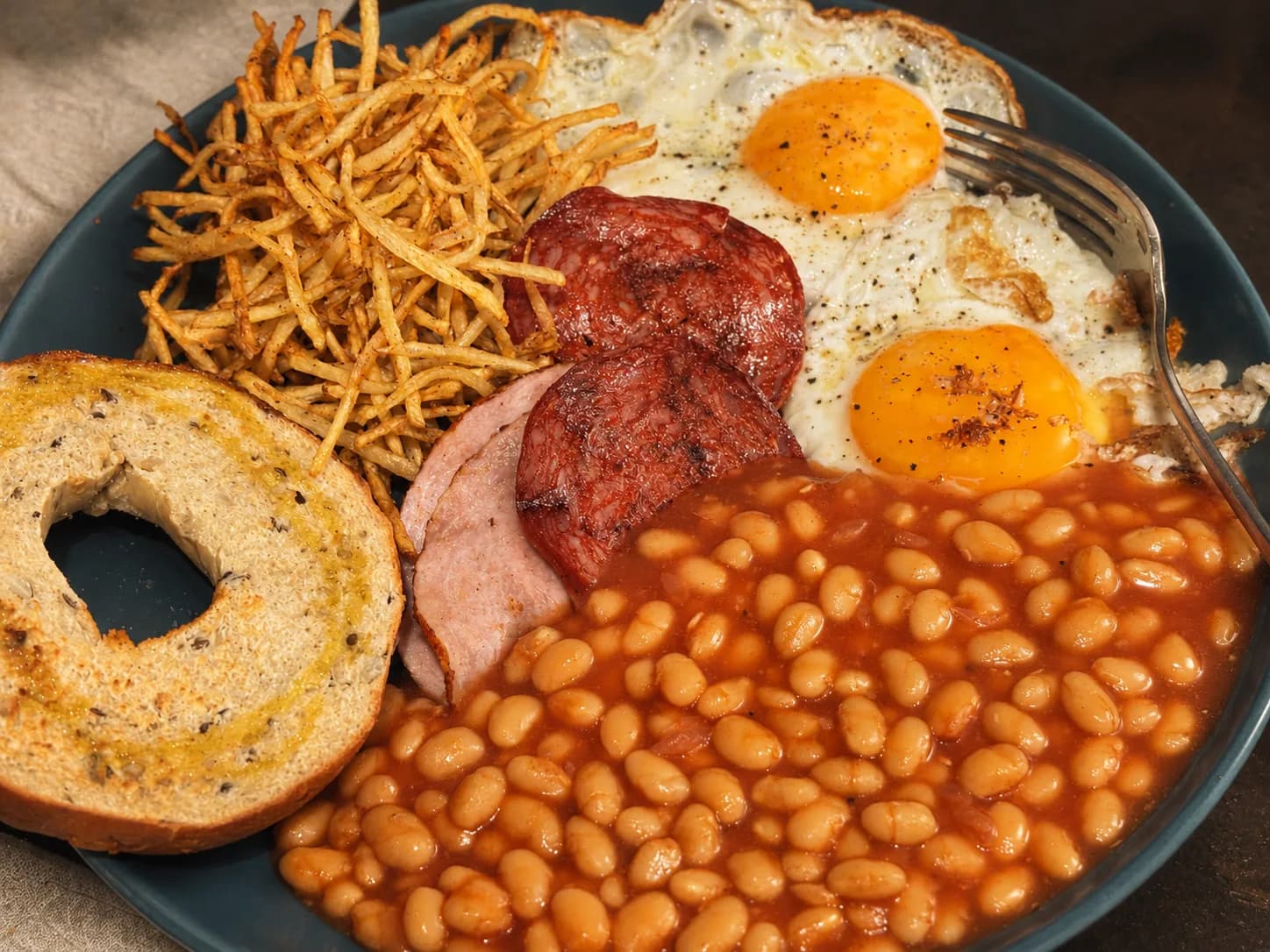
A full English is a plate of small, simple things that all have to arrive hot at once, and that timing is the whole trick of it. This is the halal version. Turkey rashers stand in for pork bacon, and there is one halal beef sausage each when I can find them. When I cannot, a few slices of sujuk take their place, bringing a little spice and the best fat there is for frying an egg. The hash browns are homemade. I grate the potatoes, wring them out in a tea towel until they are properly dry, season them, and let them crisp in the air fryer with a shake every few minutes, so they come out as a loose, crunchy pile of golden strands rather than a neat patty. The oven, the air fryer and one frying pan share the work, and the running order gets everything to the table together.
Beef Chow Mein
660 cal · 30g protein
Chow mein simply means fried noodles, and the Cantonese way with them is a hot wok, very little sauce and noodles that pick up crisp, toasty edges rather than turning soft and slippery. This version keeps to that. The beef is velveted with a pinch of bicarb and a little cornflour, so it stays silky through a hard sear. The noodles are boiled for just a minute, dried properly and left alone in the pan until they crisp in patches. The light soy goes round the hot rim of the wok, where it sizzles and catches before it reaches the noodles, which gives a smokier edge than pouring it straight in, and ginger goes in alongside the garlic. To finish, a spoonful of chili crisp over each plate adds heat, crunch and a little more oil to bind it all.
Chicken Katsu Curry
785 cal · 47g protein
Katsu curry is Japanese comfort food at its most generous: a golden breaded cutlet, a mound of short-grain rice and a thick, mellow curry sauce that is more sweet and savoury than hot. This version keeps the sauce simple. A block of Japanese curry roux does the seasoning and the thickening in one go, and an onion cooked slowly until golden, a grated carrot, garlic and ginger give it body and sweetness of its own. The chicken breast is butterflied and pounded to an even 1.5cm, so it cooks through at the moment the crumb turns deep gold, and the coating gets ten minutes to set before it goes near any heat, which is what stops it slipping off. It shallow-fries in a centimetre of oil, with the air fryer written out right beside it. The curry goes on the rice and beside the katsu, never over it, so every bite still crackles.
Crispy Chili Beef
470 cal · 26g protein
Crispy chili beef belongs to the British Chinese takeaway more than to China itself: thin strips of beef in a hard, crackling coat, tossed with peppers and onion in a sticky sweet, sour and hot sauce. This version is built so the crunch survives the sauce. A pinch of bicarb keeps the beef tender, potato starch gives a glassier crust than flour or cornflour, and a double fry drives out the moisture that would otherwise soften it. Chinkiang black vinegar replaces the usual plain vinegar, for a deeper, malty sourness that tastes more like a good restaurant than a takeaway, and a spoonful of honey rounds it off. The sauce is cooked thick before the beef goes anywhere near it, then everything is tossed off the heat and eaten at once. If you would rather not deep fry, the air fryer route sits right alongside the main method.
Hainanese Chicken Rice
780 cal · 58g protein
Hainanese chicken rice is one of the great hawker plates of Malaysia and Singapore, and it is simpler than it looks. Chicken is poached at the barest simmer, and the stock it leaves behind cooks the rice, after the grains are toasted with garlic, shallot and ginger. The rice is the real star, fragrant enough to eat on its own. This version is sized for two and made with small boneless, skinless thighs, which are hard to overcook and ready in about 15 minutes. With no skin to give fat to the rice, a spoonful of chicken fat or oil takes its place. The chicken is shredded and laid over the rice with a soy drizzle, and a hot chili and lime sauce, ginger and spring onion sizzled under hot oil, and a small bowl of the broth finish the plate. It belongs as much to Singapore as to Malaysia, and it lives here under Malaysia.
Prawn Summer Rolls
480 cal · 23g protein
Summer rolls, gỏi cuốn, are Vietnam's fresh rolls: rice paper wrapped around cool vermicelli, lettuce, herbs and prawns, eaten with a dipping sauce. Apart from the crispy shallots nothing is fried, and almost nothing is cooked, so they are all about crunch, freshness and the sauce. Prawns are the filling here, because the prawn version is the one I like best. Halved lengthways and pressed against the wrapper, they show through as a row of pink stripes. Each roll also gets a spoonful of crispy fried shallots tucked in with the herbs, for a savoury crunch against the soft noodles. The dip is a peanut hoisin sauce, sweet, nutty and loose enough to cling. The method is built to be foolproof: a quick dip in lukewarm water, a damp board, and a filling kept small enough to roll tight.
Shakshuka
420 cal · 19g protein
Shakshuka is eggs cooked in a pan of peppers, onion and tomatoes, made right across North Africa and known in Tunisia as chakchouka. The name is usually taken to mean a mixture, and it is a forgiving one, but a few things make the difference between a good pan and a watery one. Here the peppers cook slowly until they are properly sweet, the harissa and spices go into hot oil before the tomatoes, and the sauce simmers until it is thick enough to hold the eggs in place. Then the eggs set gently under a lid and come off the heat while the yolks still run. It uses plain harissa from a jar, two teaspoons of it for a steady warmth, keeps feta out of the pan, and finishes with a pile of coriander, parsley and fresh green chili. Bring flatbread for scooping.
Smash Beef Tacos
795 cal · 41g protein
A smash taco is a smash burger that skipped the bun. Raw, spiced mince is pressed thin onto a small flour tortilla and laid meat side down in a hot pan, so the whole face of the beef turns to crust while the tortilla on top does the job of the press. Then it is flipped, and the tortilla fries in the fat the beef has just given up. I like it this way rather than in a fried shell: the tortilla stays warm and soft in the middle but crisps in blisters where it is pressed against the pan, so there is still a proper crunch. The seasoning is a homemade taco spice worked straight into the meat, a little cheddar melts over the top in the last minute, and against all that heat and fat go two cold, sharp things: red onions quick-pickled in lime, and a chunky guacamole with fresh green chili.
Spanish Tortilla
455 cal · 14g protein
Tortilla de patatas is the dish Spain eats every day: eggs, potatoes, olive oil and salt, with onion if you are on that side of the argument, and this version is. The potatoes and onion are poached gently in olive oil rather than fried, so they turn soft and sweet instead of crisp, and then they go into the beaten egg while still hot and sit there for ten minutes. That soak is the whole secret, because it is what makes the tortilla custardy all the way through instead of an omelette with potatoes in it. It is cooked jugosa, golden outside and soft in the very centre, with timings for a firm one too. Nothing is wasted, since the oil is strained and saved for the next one, and if the flip makes you nervous there is a lid method that skips it entirely.
Talbina
270 cal · 8g protein
Talbina is a soft porridge of barley flour cooked in milk, and a dish the Prophet ﷺ spoke of. Aisha, may Allah be pleased with her, would order talbina for the grieving and the sick, and related that the Prophet ﷺ called it a soother for the sick heart that carries away some of the sorrow (Sahih al-Bukhari 5689). Its name comes from laban, the Arabic for milk, for its pale, milky look. This version toasts the flour first, which takes away the raw, floury taste and makes the whole bowl nutty, then whisks it to a smooth, spoonable porridge in semi-skimmed milk, with a generous amount of cinnamon cooked right through it. It is sweetened with date syrup folded through at the end rather than honey, which gives it a deeper, almost caramel sweetness, and finished with more cinnamon dusted over the top, chopped dates and a few nuts for something to bite. It takes about twenty minutes and one small pan.
Tomato and Egg Stir-Fry
670 cal · 21g protein
Tomato and egg is one of the first dishes many Chinese home cooks learn, and it earns its place: two main ingredients, ten minutes at the hob, and a sauce that turns a bowl of plain rice into dinner. The eggs are beaten hard and cooked fast in a very hot pan, so they puff into big, soft curds, then lifted out while they are still underdone. The tomatoes go in as wedges and cook only until about half of them collapse. They are sweetened with a spoon of ketchup rather than a heap of sugar, the modern home cook's trick, which gives a deeper red and a sauce with more body, with a little sugar to top it up only if the tomatoes need it. Half a teaspoon of black vinegar at the very end sharpens all that sweetness so it tastes bright rather than sugary. The eggs go back in at the very end, so they finish cooking in the sauce and stay soft.
Zemiakové Placky
375 cal · 8g protein
Zemiakové placky are what a Slovak kitchen does with a bag of potatoes: grated fine, wrung dry, bound with egg and a little flour, seasoned with plenty of garlic and dried marjoram, then fried thin in hot oil until the edges go lacy and brown. In Slovakia they are eaten hot from the pan on their own, or with something saucy alongside. I pair them with my goulash, ladled over the top so the middle softens into the paprika sauce while the rim stays crunchy, which makes a plain side into a proper Slovak dinner. The batter turns on one small step most recipes rush. Let the potato water stand for five minutes and a layer of pure white starch settles at the bottom. Stir that back in and the placky hold together on less flour, so they fry thinner, crisper and lighter.
Slovak Beef Goulash
610 cal · 50g protein
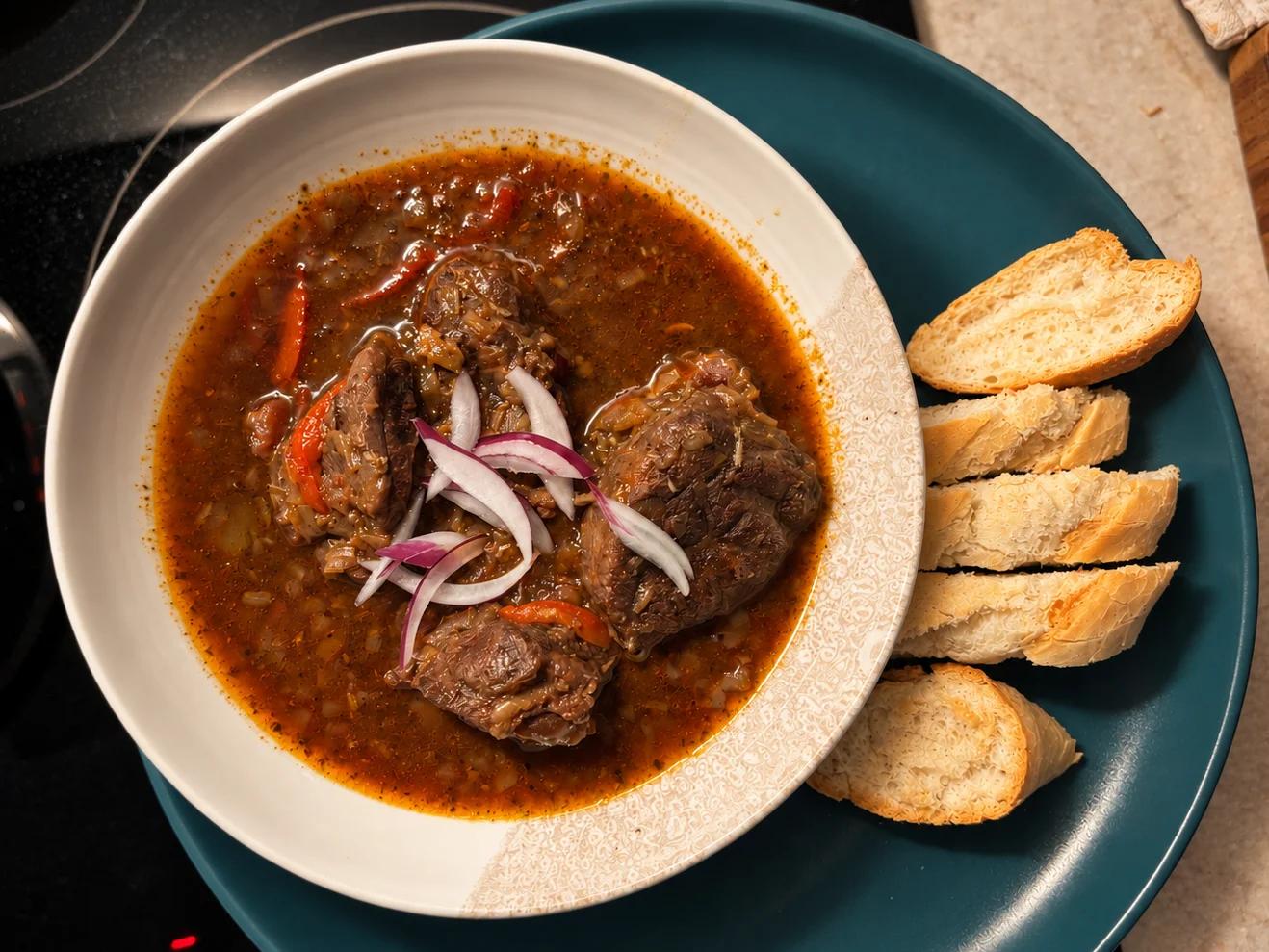
This goulash came to me from my husband's father, who is Slovak, and the whole recipe hangs on one instruction he was very firm about: cook the onions for far longer than feels right. Nearly a kilo of them goes into the pot and comes out, about 45 minutes later, as a soft dark paste that melts into the stock and thickens everything without any flour. After that it is good Hungarian paprika, a little caraway and marjoram, peppers, and beef shin left to simmer until it falls apart. Raw garlic goes in only at the very end, so it stays sharp and fresh against all that slow-cooked sweetness. It is a thick, brothy goulash, the kind you eat from a bowl with plenty of bread to wipe it clean.
Golden Tofu and Soba Bowl
730 cal · 39g protein
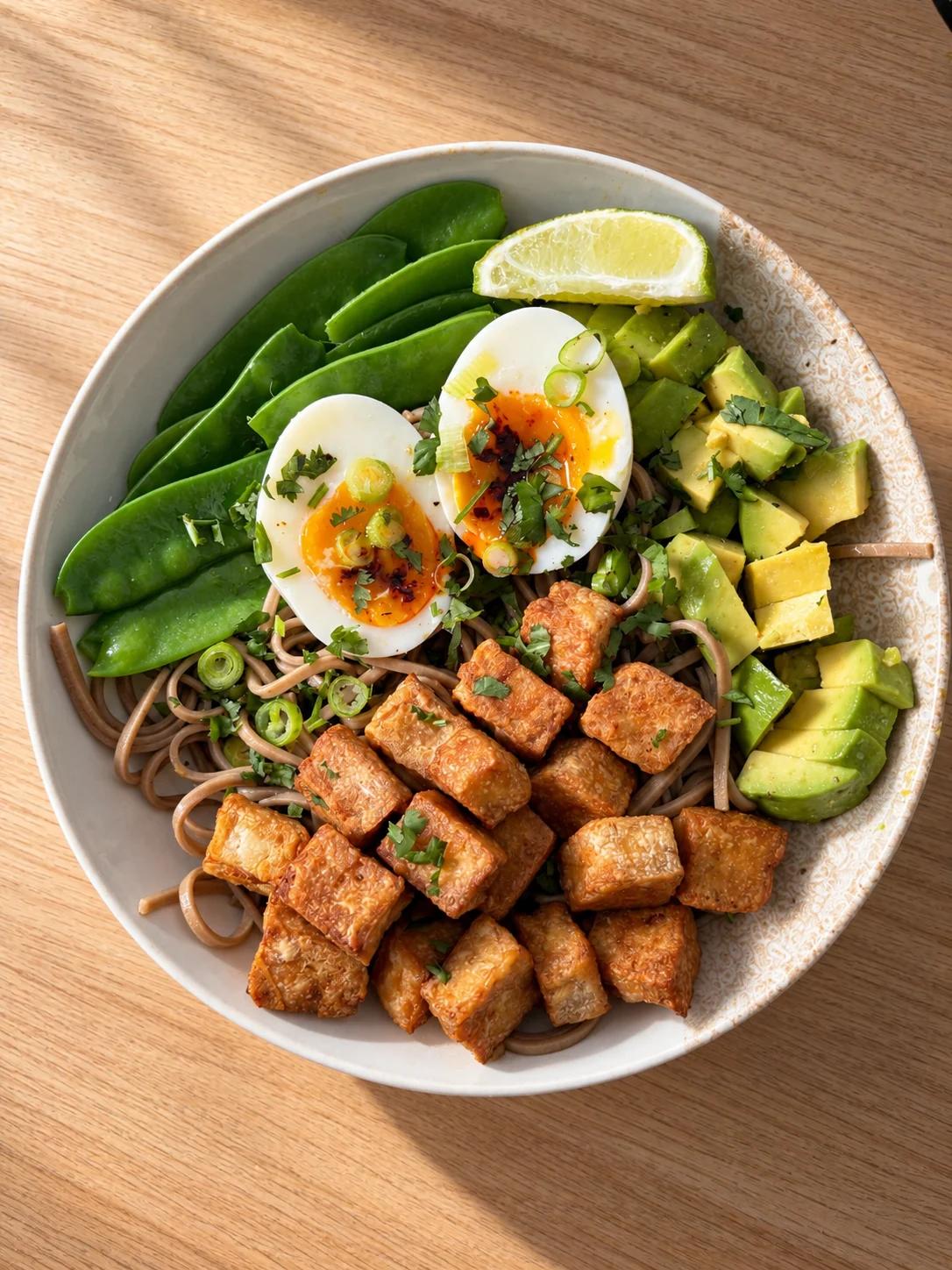
This is the bowl I make when I want something fresh that still feels like a proper meal. Soba is Japanese through and through, cooked for a few minutes and then washed in ice water until it turns springy, but the dressing leans towards China: rice vinegar, chili oil, a little toasted sesame oil and a lot of fresh ginger and garlic, with handfuls of coriander and spring onion stirred straight in. The tofu gets a coat of sweet potato starch before it goes into the air fryer, which turns it crisp and golden with almost no oil. Everything else is about timing. The egg gets exactly six and a half minutes so the yolk stays soft, and the mangetout gets forty-five seconds so it still snaps when you bite it.
Honey Soy Salmon on Mash
770 cal · 42g protein
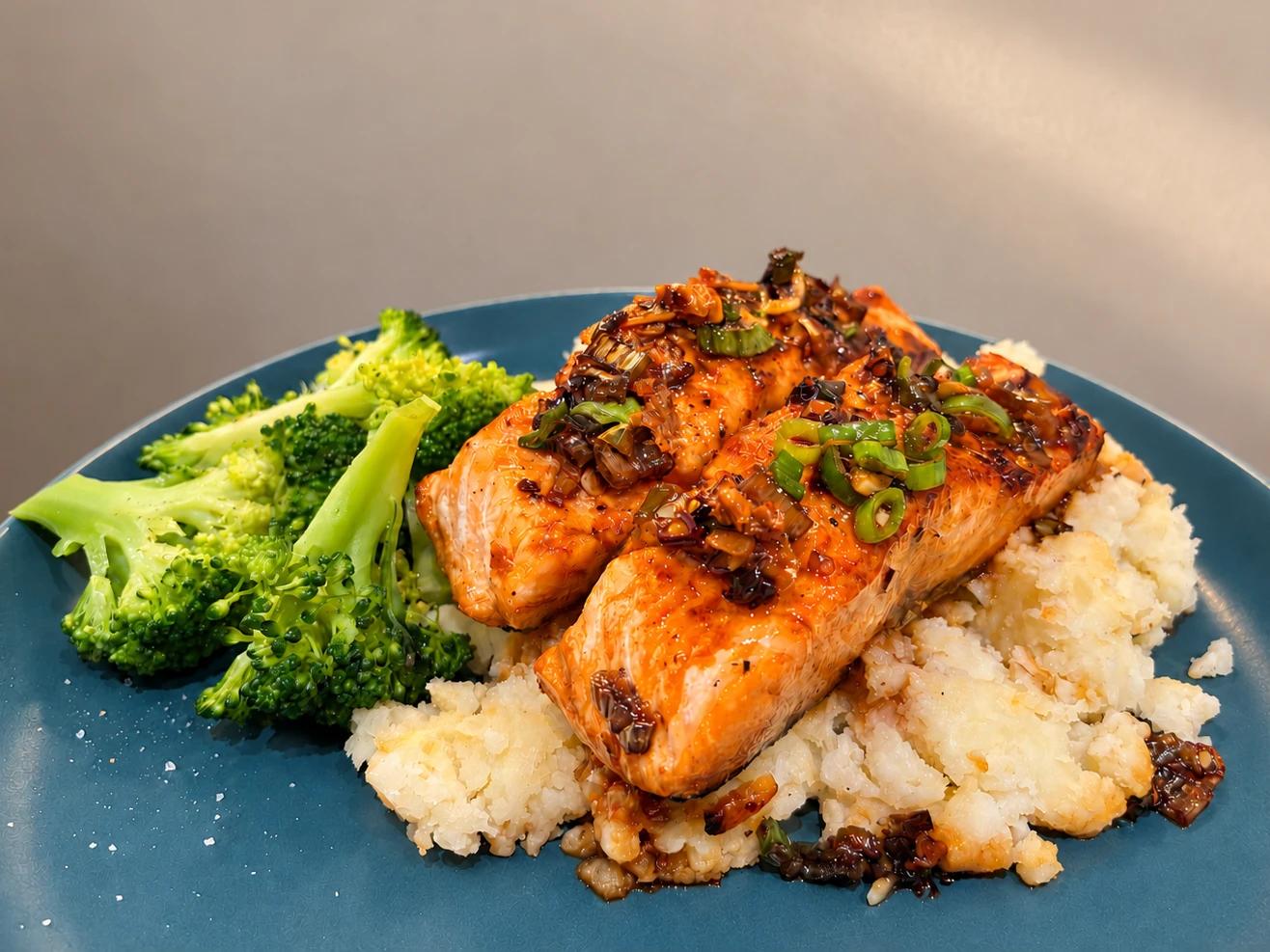
This is the salmon I make when I want dinner to taste like far more effort than it was. The fish cooks twice: a hard sear in the pan for crisp skin, then a gentle finish in the air fryer under a glaze of soy, honey and chili oil, which reduces once in the pan and again around the fish. The salmon itself gets nothing but salt and pepper, because the glaze, the garlic and the spring onion do all the talking. It goes on top of a plain mash with some crunchy broccoli on the side, and the mash is really there to catch the sauce.
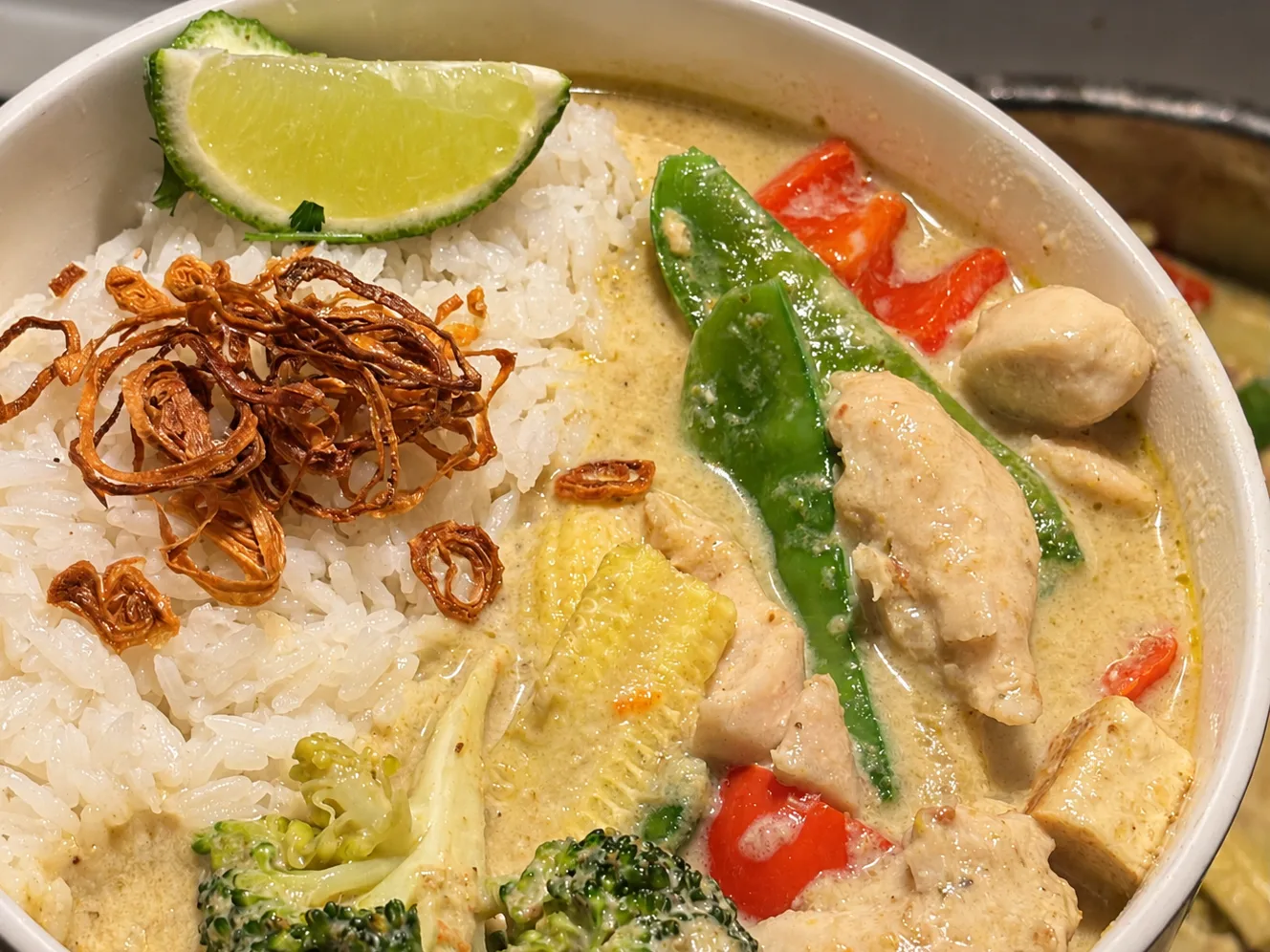
Thai Green Curry
420 cal · 35g protein
Green curry is the one I come back to most. It is quick enough for a weeknight and it never feels like a compromise. This is how I make it now: the chicken velveted so even breast stays silky, the paste fried slowly in cracked coconut cream until the whole kitchen smells of it, and a pile of crispy shallots made in the air fryer while it simmers. The vegetables are whatever is in the fridge, added late so they keep their bite, and if there is leftover tofu, it goes in too.
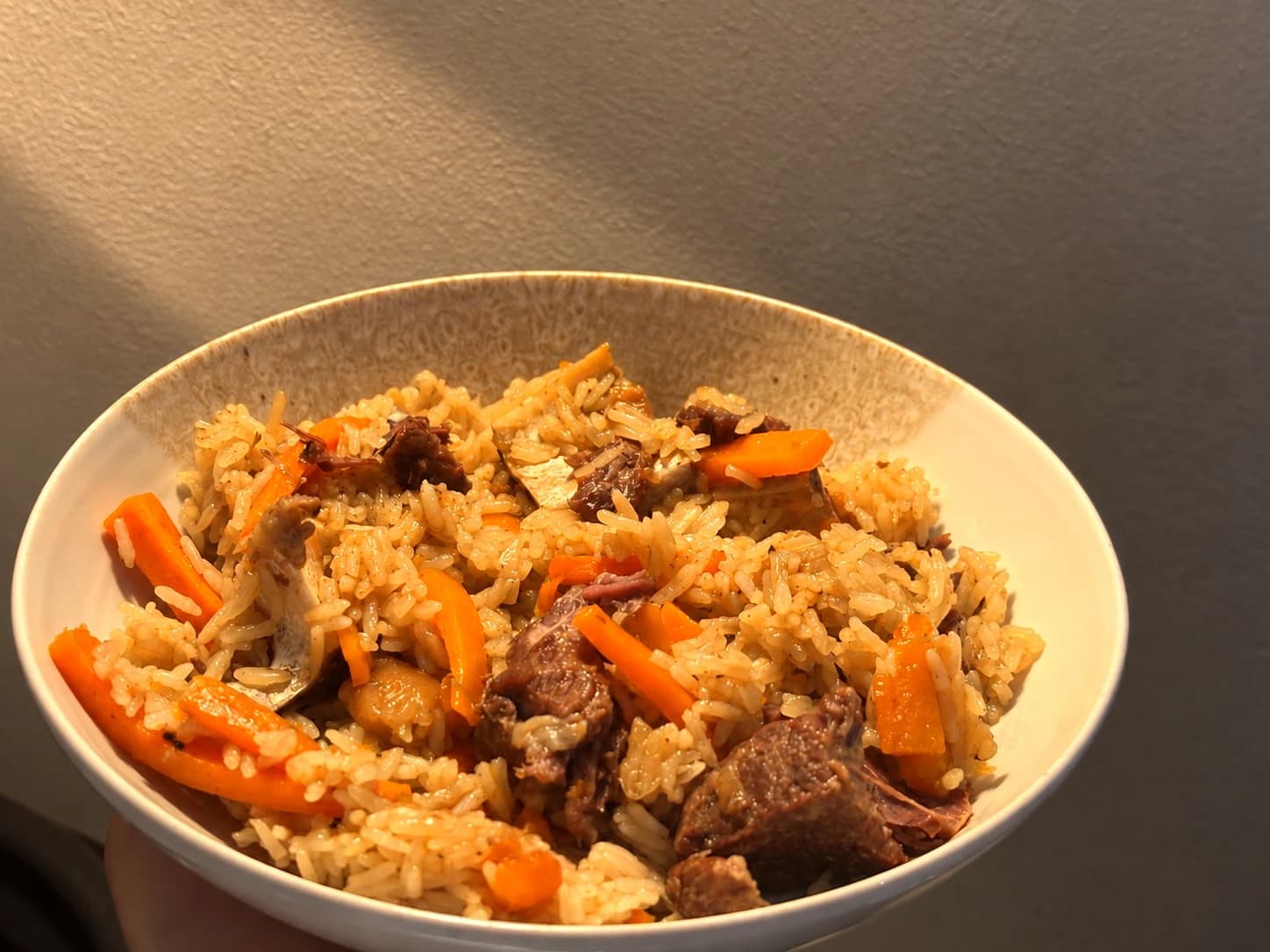
Uyghur Lamb Polo
720 cal · 39g protein
Xinjiang style polo, the one-pot cousin of Uzbek plov, and the dish I reach for when I want the house to smell like cumin for the rest of the day. Bone-in lamb shoulder goes into a long slow braise until it gives up everything it has to the liquid around it, and that liquid is what cooks the rice. Whole cumin seeds and a heavy hand with white pepper do all the flavouring, no ground spice at all. The rice comes out fragrant and separate rather than sticky, because the broth is measured before it ever goes near it.
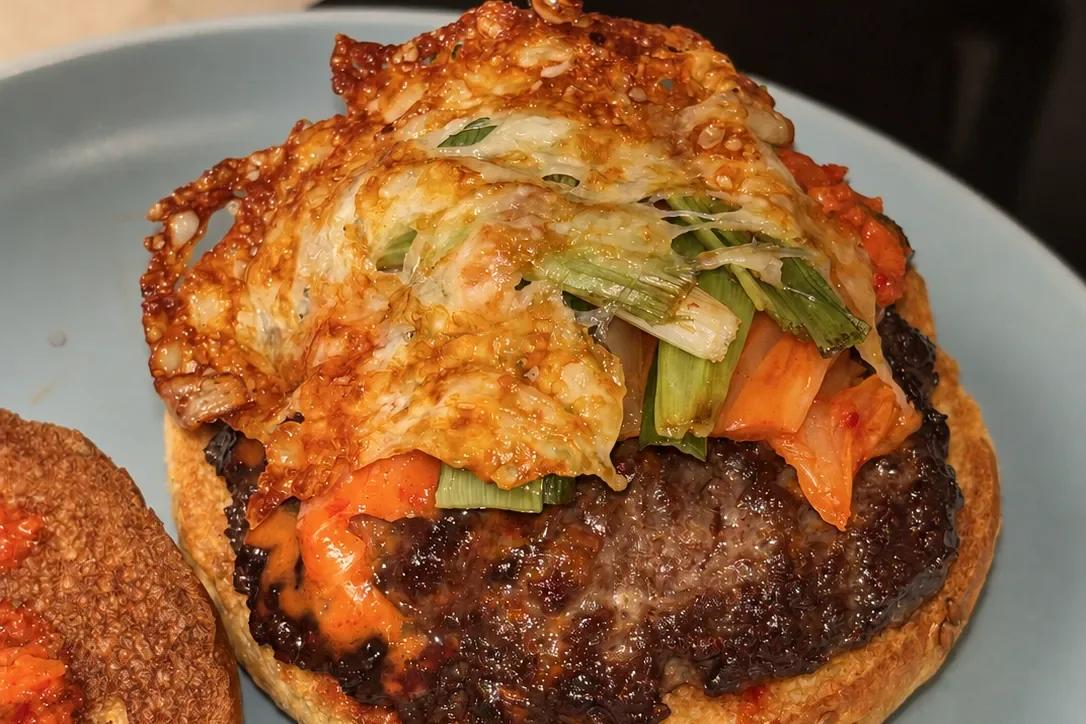
Korean Smash Burger
670 cal · 38g protein
The bones of this are an American smash burger, cold beef flattened into a screaming pan so the whole underside turns to crust. Everything on top of it is Korean. The onions are spring onions, cut into long strips and charred in the beef fat. The sauce is gochujang loosened with mayo and the juice squeezed out of the kimchi, and the chopped kimchi itself goes on for sourness and crunch. The mozzarella is the part I am proudest of: it is crisped separately into a lacy round, then laid on the patty melty side down, so one layer gives you both the pull of melted cheese and a shatter on top. It is a twenty minute burger that eats like something ordered at a counter.
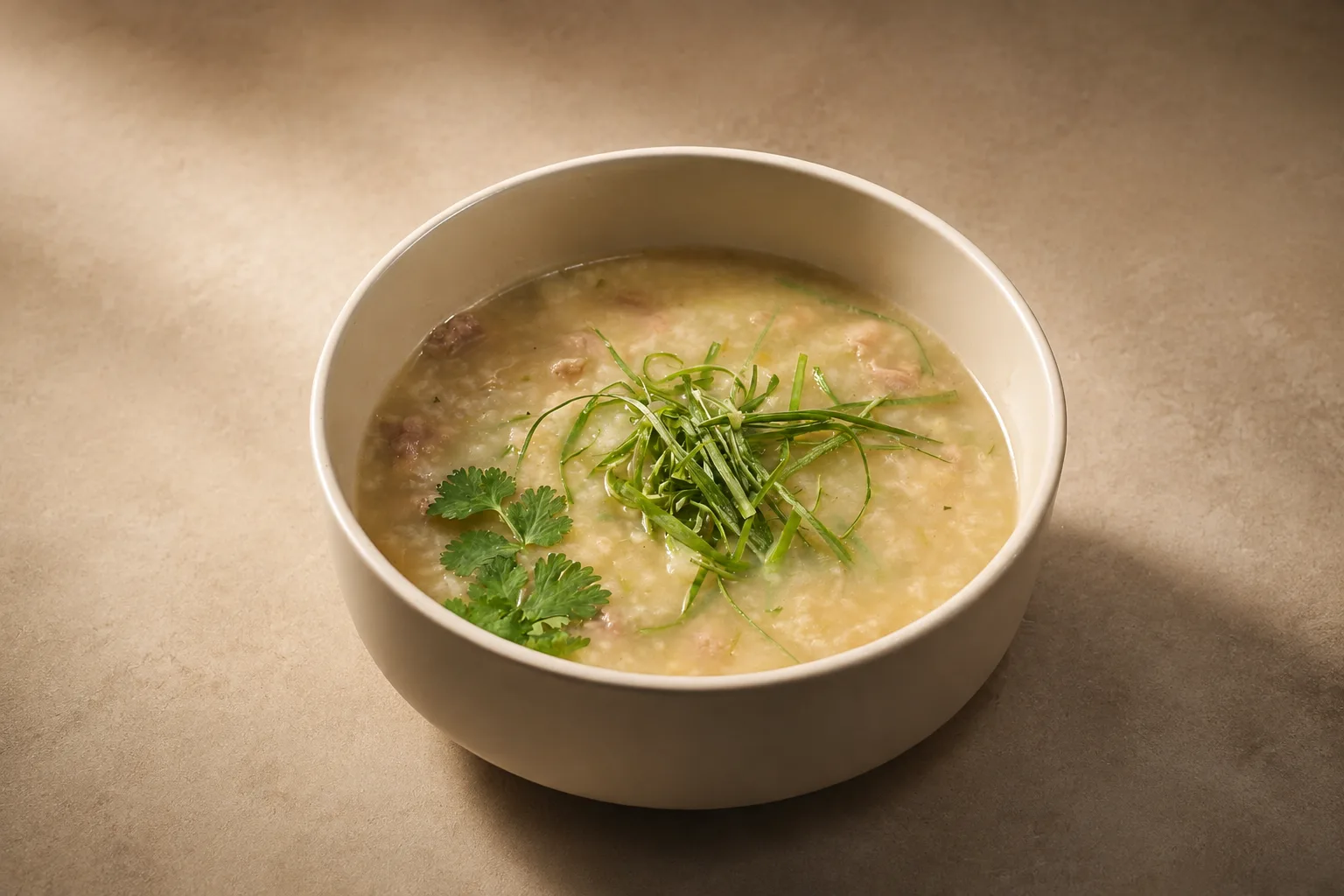
Congee
370 cal · 24g protein
Congee is what a pot of rice becomes when you give it far more water than seems reasonable and most of an hour to think about it. Every rice-eating country keeps its own version. Cantonese jook sits at the silkiest end of the scale, where the grains dissolve away entirely, Teochew muay keeps them loose and separate in a thin broth, and the same idea turns up as okayu in Japan, juk in Korea and lugaw in the Philippines. This is the weeknight one, built on day-old rice from the back of the fridge, which brings it down to about 35 minutes of mostly ignoring a pot. It is traditionally breakfast, and it is very good as breakfast, but it is just as welcome at eleven at night. Mostly it is the answer to leftover rice on the evenings you cannot face making fried rice again.
Slovak Lángos with Garlic Water
380 cal · 8g protein
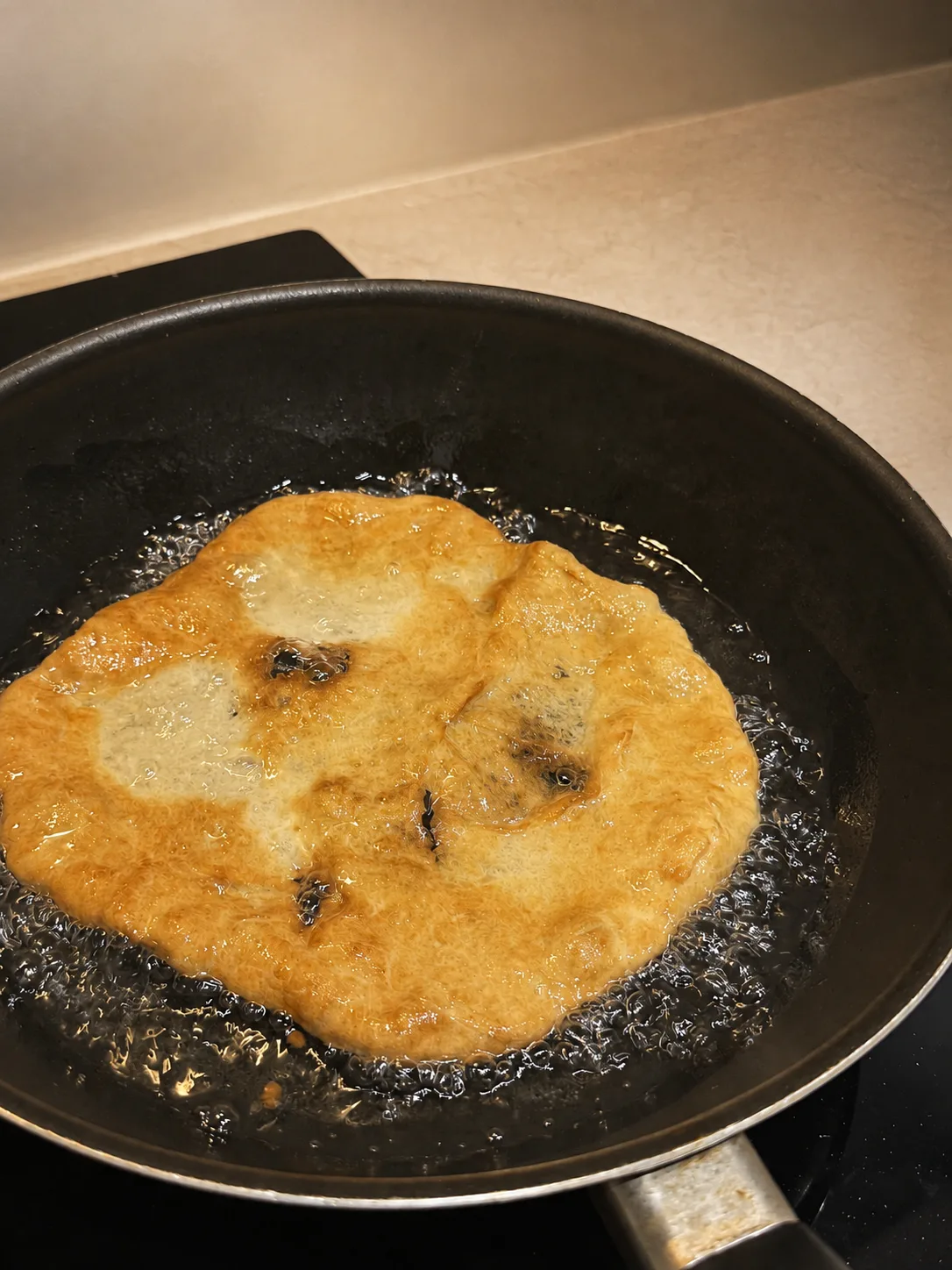
Lángos is Hungarian by birth. The name comes from láng, meaning flame, and it travelled with the old Austro-Hungarian empire until it was just as much at home in Slovakia, where my husband grew up eating it. This is his father’s version, scaled down for a home kitchen, and it is the plain one: no potato in the dough, no blanket of sour cream and grated cheese. Just a slack, sticky dough stretched thin by hand and fried hot and fast so it puffs and blisters, then brushed while it is still steaming with garlic crushed into salted water rather than oil. The garlic water is the whole thing. It soaks in rather than sitting on top, and an hour of standing takes the raw edge off it. Small pieces, one at a time, eaten standing up in the kitchen before anyone thinks to sit down.
Potato, Leek and Corn Soup
380 cal · 9g protein
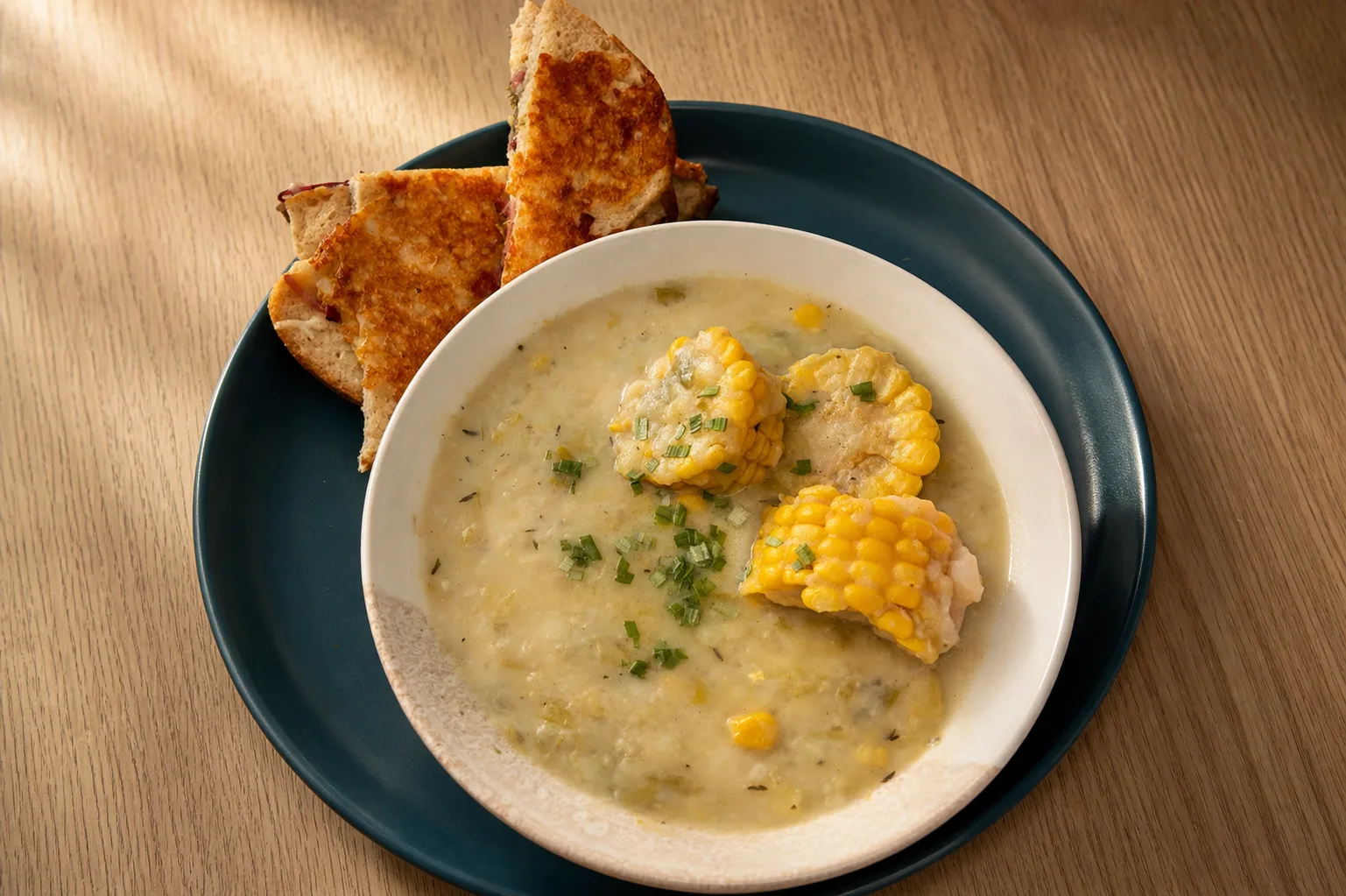
Potage parmentier is the spine of this, potato and leek softened in butter until sweet, but two things pull it somewhere else. The corn goes in as cob rounds rather than loose kernels, so it leaks a milky sweetness into the broth and then sits up out of the bowl to be picked up and eaten with your fingers. And it is thickened by hand with a masher rather than a blender, which leaves recognisable pieces of potato instead of a smooth puree. On its own it is a light bowl, around 380 calories, and it is meant to be good enough to eat that way. If you want it to be a proper dinner there is a chorizo and caramelised onion grilled cheese at the end of the method, fried onto a scattered patch of its own cheese so the outside shatters. It is optional, it roughly triples the calories, and it fits entirely inside the twenty minutes the soup spends looking after itself under a lid.
Gochujang Beef Meatballs
640 cal · 36g protein
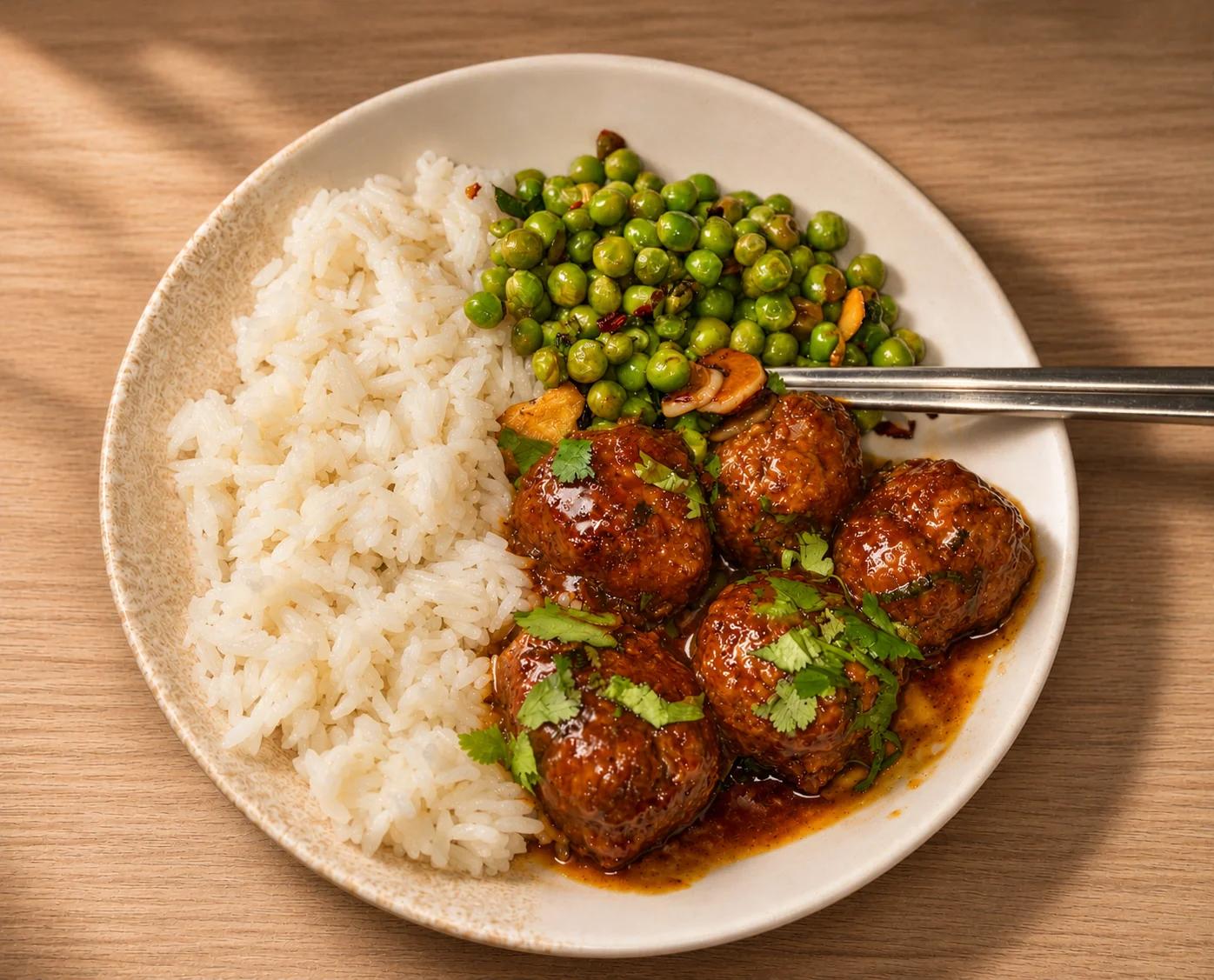
These are some of the best meatballs I have ever made. They hit every note at once: plenty of garlic, the warm bite of fresh ginger, the deep fermented umami of gochujang, and a sticky glaze sweet enough that you keep going back for one more. The gochujang goes into the mince as well as the glaze, so the meat carries its own flavour instead of leaving it all on the outside. From 500g of mince you get sixteen, each about the size of a golf ball, so four each and properly generous. The timing is kind too. Rice runs in the pressure cooker while the meatballs brown, the peas take three minutes at the end in a hot wok, and nothing waits on anything else.
Gochujang Double-Fried Chicken
540 cal · 48g protein
This is my take on Korean fried chicken, the yangnyeom kind lacquered in a sweet, spicy gochujang glaze. The crust is the whole point, so it leans on two things: a light potato-starch coating with a little baking powder for lift, and a double fry that sets it crisp enough to stand up to the sauce. I fry the gochujang with garlic and ginger before it ever meets the glaze, which cooks out the raw edge and gives the whole thing more depth than a straight stir-together sauce. Toss it quick, eat it quicker.

Turkish Eggs
440 cal · 21g protein
This is my take on Turkish eggs. The classic version, çılbır, is poached eggs over cold garlic yogurt with a spiced butter drizzle, and that runny-yolk-meets-tangy-yogurt idea is the heart of it. I build on it with a slow-cooked base of onions and cherry tomatoes, somewhere between çılbır and menemen, so every spoonful has sweetness and warmth alongside the cool yogurt. It comes together fast once the onions are down, and a piece of good sourdough makes it.
Spaghetti Aglio e Olio
620 cal · 13g protein
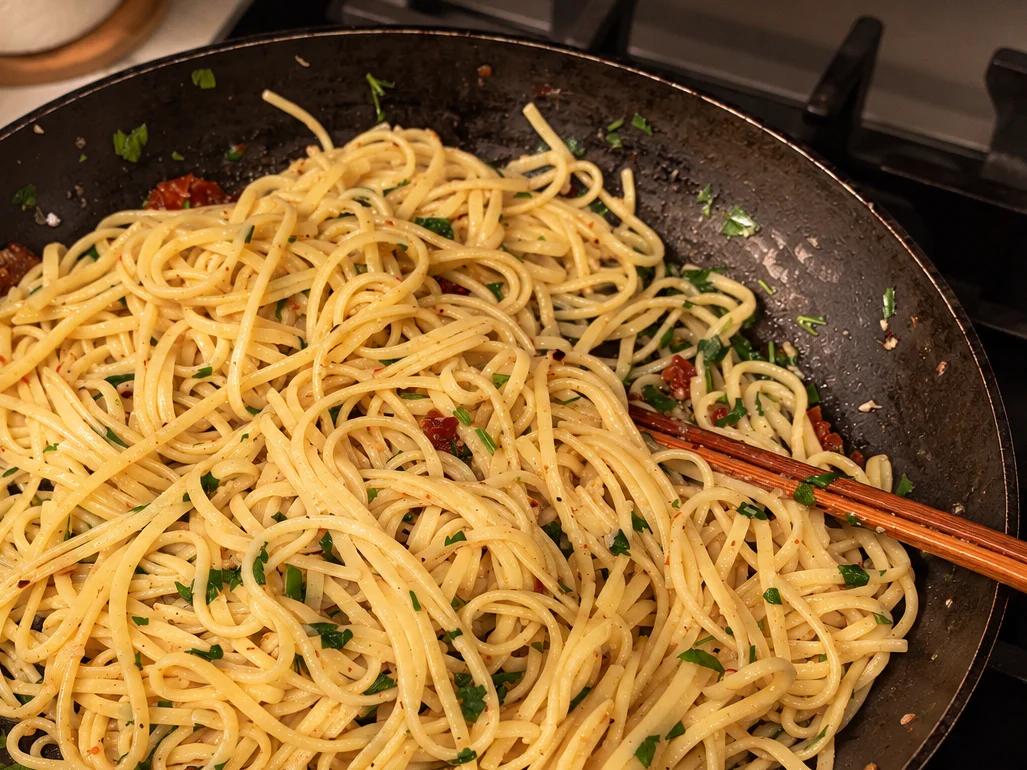
Aglio e olio is proof that almost nothing can become dinner. Spaghetti tossed in a slow, golden garlic oil with a whisper of chili, emulsified with a splash of pasta water until it clings to every strand. I keep the classic version meatless, but I usually add prawns to keep the plate a little more balanced. Chicken works too. Either way the seasoning stays simple, because the garlic oil is the whole point.
Sesame Prawn Spaghetti
640 cal · 42g protein
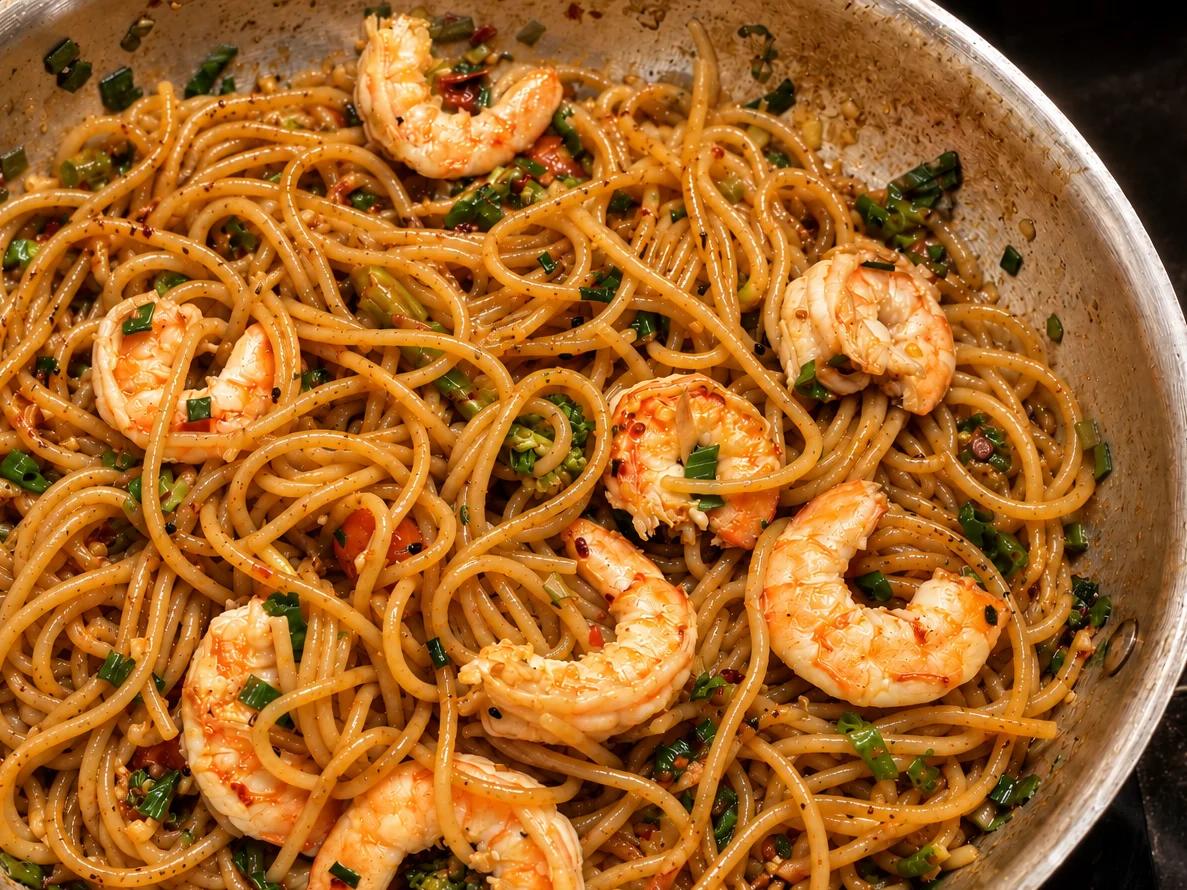
This is my weeknight fusion of an Italian pasta and a Chinese wok dinner. The whole dish turns on one move, frying the prawn heads until their sweet orange oil releases and then building everything in that same pan, so a small amount of soy and sesame goes a long way. Seek out a rough, bronze-cut spaghetti or linguine if you can, because there is not much sauce here and you want every strand to hold onto it.

Xinjiang Lamb Dumplings
450 cal · 24g protein
These are my Xinjiang style lamb dumplings, built around cumin, ginger, and plenty of spring onion and coriander. I keep them easy by using shop-bought wrappers from the Chinese supermarket, which are cheap and come in generous packs, so the only real work is the filling and the folding. One filling, two ways to finish: steam them for something lighter, or pan-fry them for a golden, crisp base. Either way they freeze well, so I usually make a big batch.
Tomato and Beef Lasagna
540 cal · 34g protein
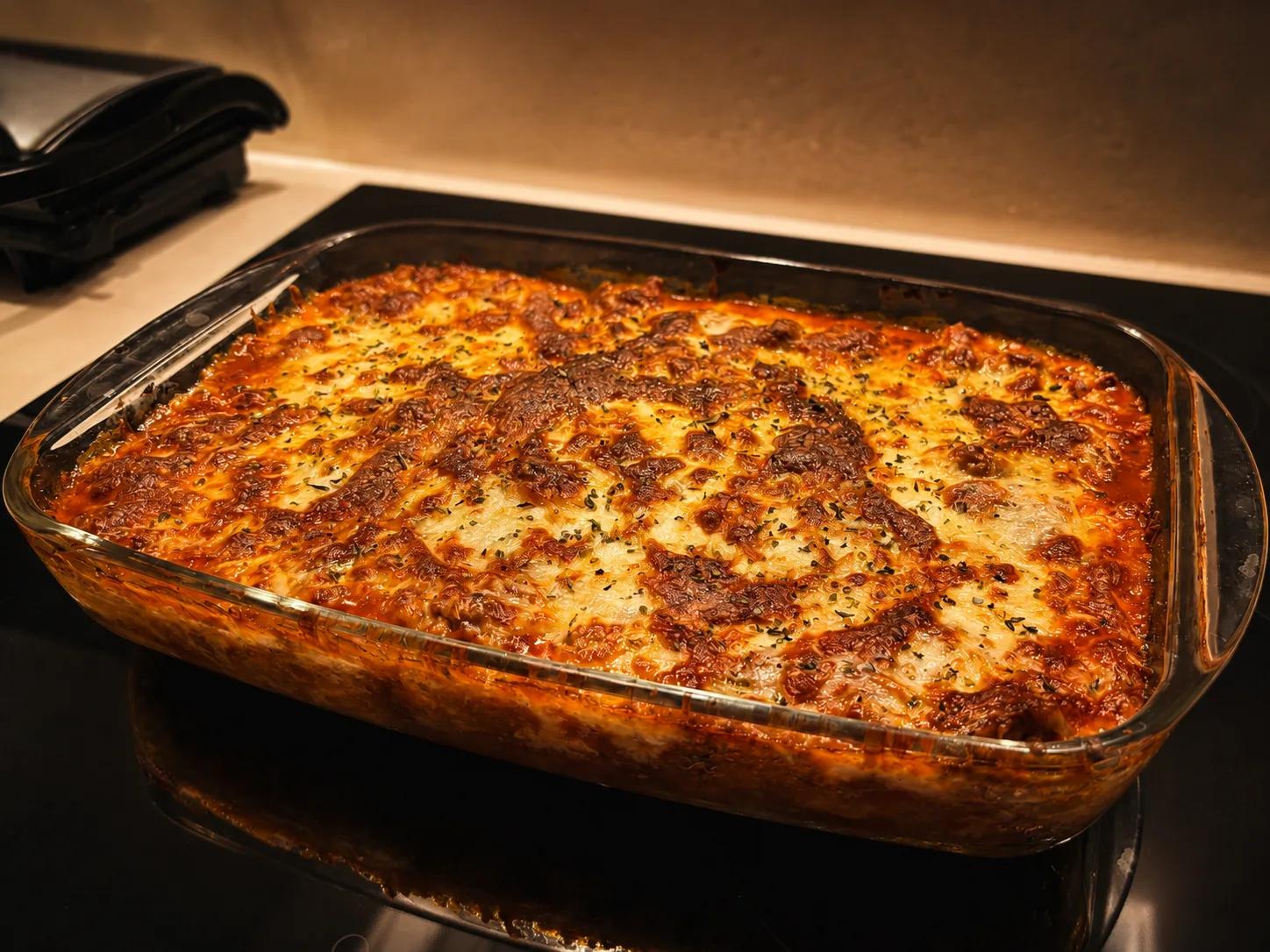
This is my twist on lasagna. There is no béchamel and no parmesan here, because I am not a fan of really creamy, heavy bakes. Instead it leans entirely on a slow, well-balanced tomato and beef sauce, layered with just enough grated mozzarella to melt between the sheets and crisp into a golden lid on top. It is generous, comforting, and even better the next day.
Dumpling Lasagna
560 cal · 42g protein
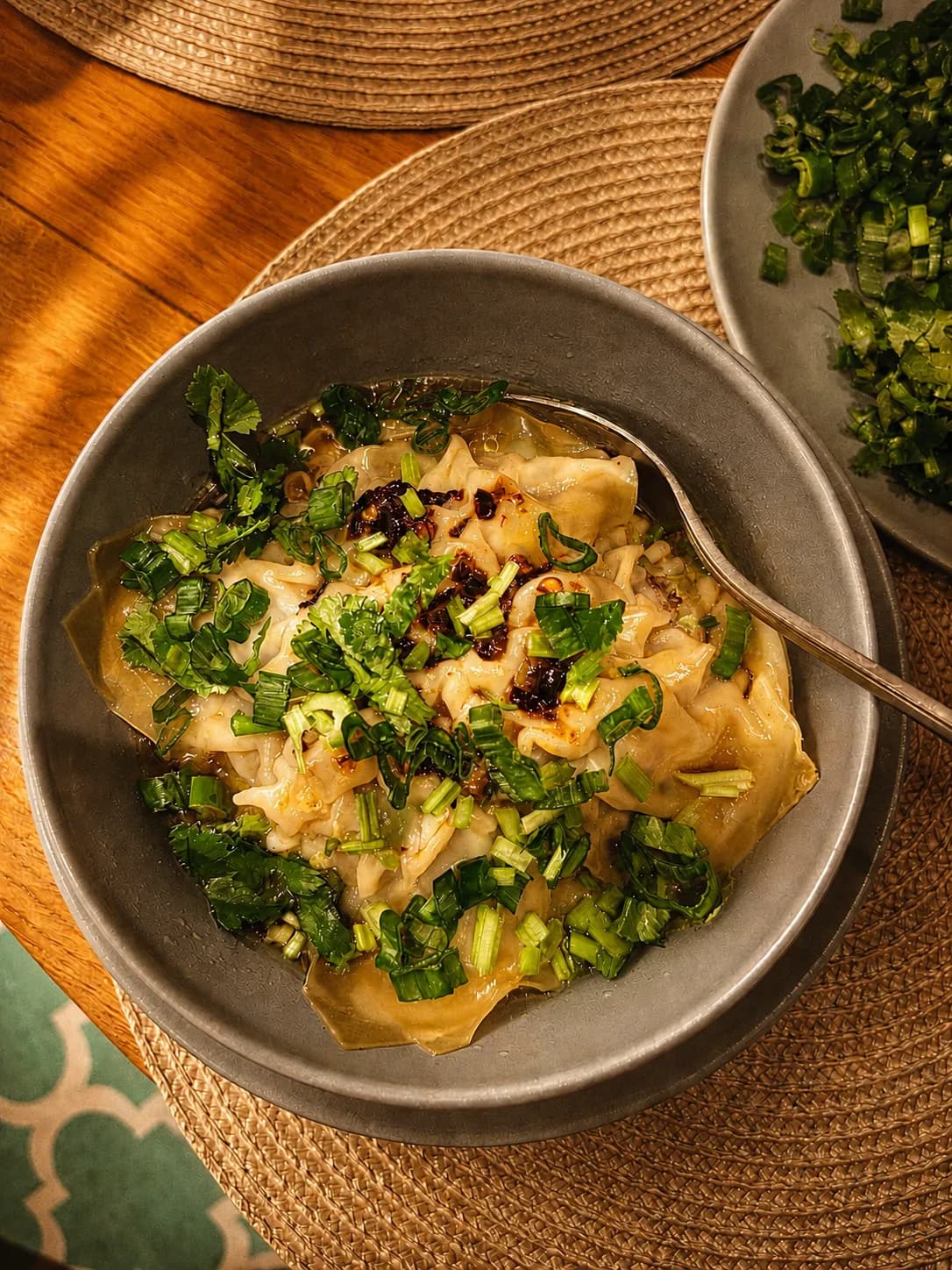
This is what I make when I am craving dumplings but cannot face folding them one by one. Seasoned beef and Napa cabbage get layered between shop-bought dumpling wrappers like a tiny lasagna, then steamed in a pour of stock until the wrappers turn silky and the whole thing sits in its own savoury broth. It comes together in one bowl, and the finishing drizzle of chili oil, soy, and sesame is what makes it sing.